
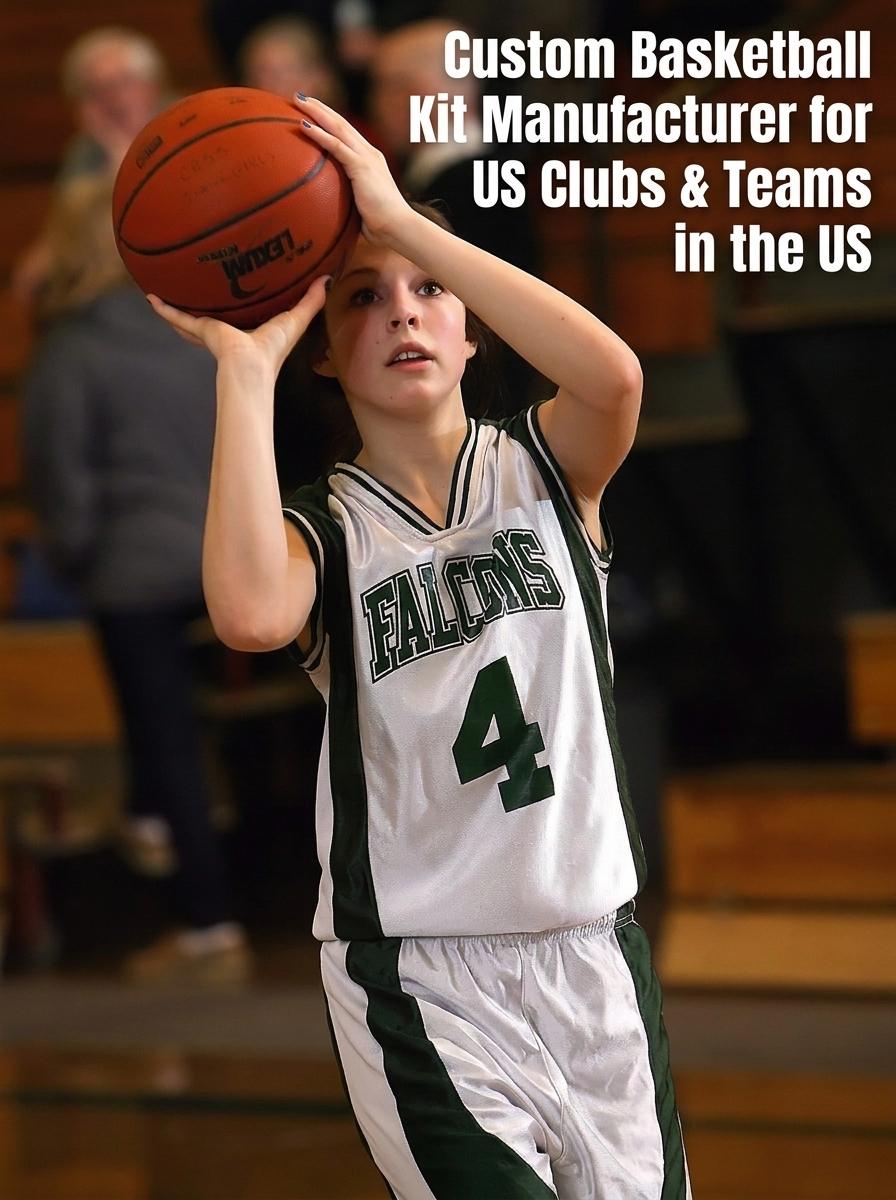
Every US coach or club manager knows the nightmare: the jerseys arrive two days before the season opener, the back numbers break league rules, half the sizes are wrong, and a surprise import bill lands on the treasurer’s desk. Choosing the right custom basketball kit manufacturer in the USA, or one that ships here reliably, is what separates a smooth season from a scramble.
This guide covers what to look for in a manufacturer, which kit options clubs actually order, US leagues rules (NFHS, AAU and rec leagues), real pricing, and how duties and delivery work, so your team is dressed and ready by tip-off.
What to Look for in a Custom Basketball Kit Manufacturer?
Most kit problems come from choosing the wrong supplier, not from the design. Before you request a quote, check each of the points below.
Do they make kit themselves, or broker it?
A factory with its own cutting, sublimation and stitching floor controls quality, deadlines and fixes. A broker or reseller adds a markup and middleman, and when a jersey comes out wrong, you wait while they chase the factory.
A minimum order that fits your club
Many suppliers set high minimums that don’t suit a single youth team or a small rec league. Look for a low MOQ per design and, just as important, mixed sizes within that minimum, so one design can cover your under -12s and your seniors in the same run.
Sublimation done properly
Sublimation prints the design into the mesh, so numbers and sponsor logos won’t crack, peel or fade. Ask about:
- Fabric: 100% polyester mesh, typically 140-180 GSM
- Colorfastness: is every fabric tested for wash and color fastness before cutting?
- Number options: can they also offer tackle twill if your seniors want a traditional look?
A free mockup and unlimited revisions
A good supplier shows you the finished uniform before you pay for production. Look for a free digital mockup within 24 hours and revisions until your committee and sponsors approve. Make sure the mockup shows front and back views, the number placement and every sponsor logo in position.
Proper sizing support
Wrong sizes are the most common headache in club orders. The best manufacturers send a size chart, grade youth and women’s cuts on their own patterns (not just scaled-down adult blocks), and offer a physical sample so you can check the fit first. Ask whether the sample cost is credited against your bulk order.
A written defect policy
Don’t rely on a verbal promise. Get the guarantee in writing, including how long they have to remake a faulty garment, how long you have to report it, and what counts as a defect.
Honest timelines and clear shipping terms
For US buyers, ask for production time and courier time separately, whether express production is available, and who pays duties and import taxes on arrival. A supplier who is vague about customs fees is a supplier who will surprise you later.
Ready to Start Your Order
Request your bulk quote today and outfit your team with confidence.
Let’s TalkWhat US Clubs Actually Order
A US club rarely buys just a game jersey. Most orders mix several items across age groups, so it helps to know what to put on the list before you request a quote.
| Item | Best for | Typical Fabric |
| Game jersey and shorts | League fixtures, one set per team | 100% polyester mesh, 140-180 GSM |
| Reversible jersey | Youth and rec leagues, one garment for light and dark | Two mesh layers, 140-180 GSM each |
| Shooting shirt | Pre-game warm-up and bench | Interlock or mesh, 140-180 GSM |
| Warm-up jacket, hoodie, joggers | Travel and courtside | Performance fleece, 240-300 GSM |
| Practice pinnies | Scrimmage teams at training | Lightweight mesh |
| Backpack and duffle bag | Players and coaching staff | 600D polyester |
Reversible or Two Uniforms?
Most US leagues require a light and a dark option. Reversibles cover both in one garment and suit youth and rec teams on a budget. Senior and travel teams usually prefer two single-layer uniforms for a cleaner finish.
Choose Fabric for Where You Play
Clubs in air-conditioned indoor gyms through the winter can use the heavier end of the mesh range for a fuller drape. Teams playing summer AAU tournaments, especially in the South and Southwest, do better with lighter, more open mesh that dries between games.
Order Everything in One Run
Warm-ups, shooting shirts and bags made alongside your uniforms share the same crest, colors and Pantone references, so the whole team looks matched. Bundling items also tends to lower the per-piece cost.
Sublimated vs. Tackle Twill vs. Heat-Press Numbers
The way numbers and names are applied affects how your uniform looks, how long it lasts and what it costs. Here is how the three main methods compare.
| Method | Look | Durability | Best for |
| Sublimated | Flat and smooth, any color, gradient or level of detail | Printed into the mesh, so it won’t crack, peel or fade with normal washing | Game uniforms, reversibles, youth kits, sponsor logos |
| Tackle twill | Raised, stitched fabric letters and numbers in one to three layers | Stitched on, very hard-wearing, but heavier on the jersey | Senior and high school teams wanting a traditional or college look |
| Heat-press vinyl | Flat, single color | Fine for training wear, but can lift or crack over time on game kit | Practice pinnies, plain stock numbered after delivery |
Our Recommendation By Team Type
- Youth and rec teams: Sublimation. It’s lightweight, handles full-color designs and keeps the cost per jersey down.
- High school and club senior teams: Sublimation for a modern look, or tackle twill if you want a classic stitched finish.
- Practice kit and late additions: Heat-press vinyl. It’s the cheapest way to number plain jerseys after they arrive.
You can mix methods in one order. Sublimated youth uniforms alongside tackle twill senior jerseys is a common combination, as long as the crest and Pantone colors match across both.
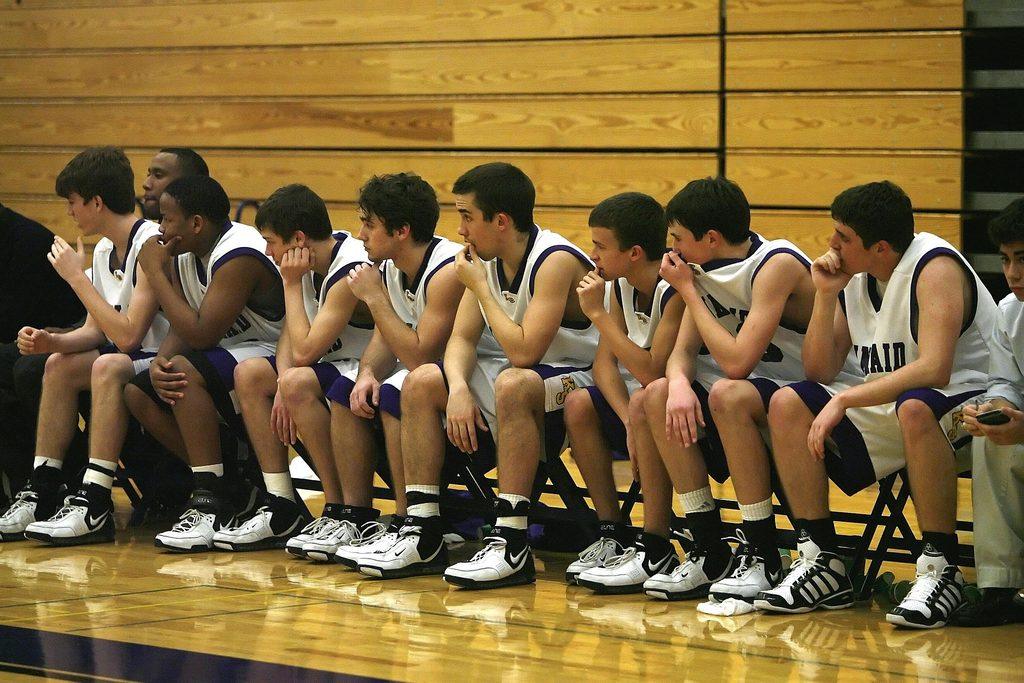
US League Rules to Check Before You Order
A jersey that looks great but breaks league rules can keep a player off the court at tip-off. Rules vary by level, so check your own handbook before you send a number list.
High School (NFHS and state associations)
- Number size: The front number must be at least 4 inches high, and the back number at least 6 inches high.
- Legal digits: Numbers must be plain Arabia numerals in the same style and color front and back. Only digits 0 through 5 are allowed, so 6, 7, 8 and 9 are out. A roster can’t use both 0 to 00.
- Contrast: Numbers can’t match the jersey fabric color.
- Back of the Jersey: The back torso must be the same single color as the front, with no designs in the fabric.
- Enforcement: Players in a non-compliant uniform are directed to leave, or not allowed to enter, the game until it is fixed.
AAU, travel and rec leagues
Rules are set by each event or league, and some follow NFHS while others are looser. Ask for the tournament or league rules in writing, especially on legal digits, name placement and sponsor logo size.
Light and dark uniforms
Most leagues require a light jersey for one team and a dark jersey for the other. Confirm which team wears which, and make sure your light and dark sets both pass the contrast rules above.
Your pre-order checklist
- Get your league or association handbook.
- Check your number list against the legal digits.
- Confirm number height, placement and contrast.
- Ask whether sponsor logos or manufacturer marks are restricted.
- Send the rules to your manufacturer so the mockup is built to them.
How Much Do Custom Basketball Uniforms Cost?
Expect to pay roughly $30 to $100 per uniform (jersey plus shorts) in the US. Where you land depends on the following.
What Moves the Price
- Quantity: Bulk orders cost less per piece. Orders of 100+ units typically cut unit cost by 20-35%.
- Decoration: Simple screen-printed sets run cheaper than sublimated designs with multiple colors or embroidery. Sublimation costs more per piece but suits full-color designs and sponsor logos.
- Reversible or two uniforms: A reversible is one garment, but its two mesh layers cost more than a single-layer jersey. Two separate uniforms cost the most.
- Fabric weight and extras: Heavier mesh, tackle twill numbers, player names and custom neck labels all add cost.
- Shipping and duties: See the overseas ordering section for landed cost.
Step-by-Step: From Crest to Court
Ordering custom uniforms takes five steps, and you don’t need finished artwork to begin.
- Send your crest, colors and roster. A photo of last season’s jersey, your logo (vector files like AI, EPS or PDF are best) and a rough team list are enough to start.
- Receive your free mockup. You’ll get a digital mockup within 24 hours, showing front and back views, number placement and sponsor logos. Revisions are free until you’re happy.
- Approve the design, and order a sample if you want one. A sample in your most common size lets you check fit and fabric before the full run. Sample cost is credited on bulk orders.
- Confirm sizes and numbers. Send your size breakdown and your number list, checked against your league’s rules. Production starts once these are confirmed.
- Production, photos and delivery. Your order is made in 10-12 business days. Request pre-shipment photos, then track your courier delivery.
Common Mistakes and How to Avoid Them
Most uniform problems are avoidable. Here are the four we see most often.
- Collecting “usual sizes” instead of measurements. Brands fit differently, so a player’s usual size is a guess. Measure chest and body length, compare against the size chart, and order a sample or size set if you have many junior players.
- Skipping the league rules check. Illegal digits, wrong number height or poor contrast can keep players off the court. Check your handbook before sending the number list.
- Ordering too close to tip-off. Production, shipping and customs all add time, and your own approvals count too. Start 10-12 weeks before your first game if you want a sample.
- Sending low-quality sponsor logos. Blurry PNGs or screenshots print poorly. Send vector files (AI, EPS or PDF) and say which team each sponsor belongs to.
Frequently Asked Questions
Yes. Names can go above the back number, and many clubs add them for senior teams. Check your league rules first, since some restrict lettering size or placement. Send the name list with your numbers and sizes so it appears on the mockup.
The most common spots are the upper chest beside the front number, the back below the number, and the shorts leg. Warm-up jackets can carry larger sponsor prints on the back. Your mockup shows every logo in position, so sponsors can approve before production.
Yes, if you send Pantone references or a photo of your current kit. Screens and printed fabric can look slightly different, so ask for a physical sample if exact color matters. Normal dye-lot variation between runs can occur.
Wash inside out in cold water with a mild detergent, and skip bleach and fabric softener. Hang dry or tumble on low heat. Because the design is printed into the fabric, it won’t peel or crack, but harsh washing can still dull the colors over time.
Sea freight can cost less for big orders but takes longer than courier. Duties and customs charges still apply, so ask for a landed-cost quote for both options.
Many manufacturers offer club-branded neck labels, and some offer certified recycled polyester on request. Ask when you request your quote, since both can affect cost and lead time.
Have a Question? Ask Away
Ready to Get Your Team Court-Ready?
The right custom basketball kit manufacturer makes ordering simple: a real factory, a low minimum, a clear mockup, honest pricing and no surprises on duties or delivery. Check your leagues rules, measure your players and order early, and your team will be dressed for tip-off.
Send us your crest and roster, and we’ll return a free digital mockup within 24 hours.
Leave a Reply