
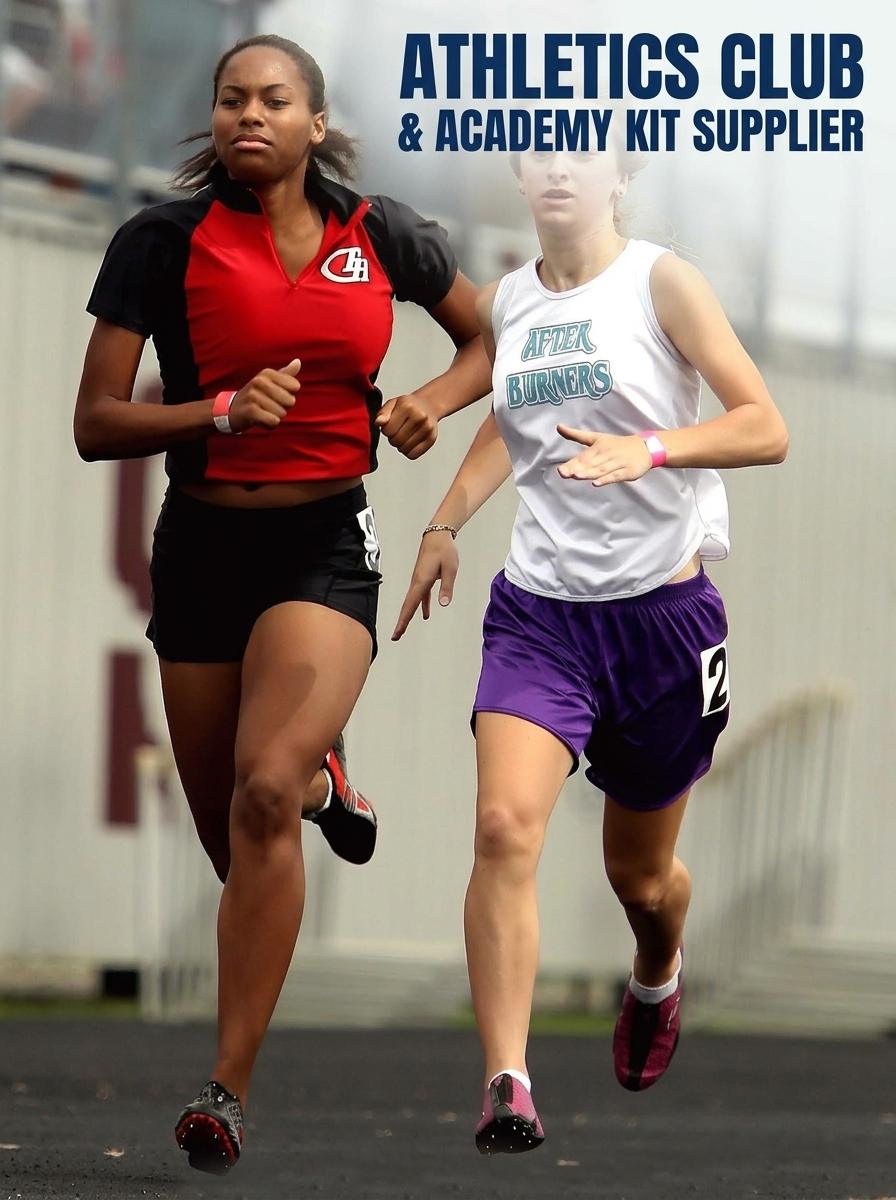
Every coach has seen it happen. The kit arrives two weeks after the first meet, the juniors’ sizes are wrong, or the colours fade after a few washes. Then a new batch of athletes joins mid-season and nobody can match the original order.
Choosing the right athletics club kit supplier prevents all of that. This guide explains what to look for in a supplier, what an academy actually needs to order, how to size growing juniors, and how long delivery really takes, so you can plan kit around your first fixture instead of scrambling for it.
What to Look for in an Athletics Club Kit Supplier
Not every kit supplier understands athletics. A good one knows that vests are worn under race bibs, that juniors outgrow kit within a season, and that a club’s colours must look identical on the first order and the fifth. Use this checklist when comparing suppliers.
A good athletics kit supplier should offer:
- Full Sublimation, not surface print: Dye bonds into the polyester fibre, so there is no layer to crack, peel or add weight to a race vest.
- Junior-to-adult sizing in one design. Graded patterns keep the crest and bib zone in proportion across every size, and mixed sizes should count as one design toward your minimum.
- Pantone colour matching held on file. Your exact shade should be stored so reorders match the original.
- Low minimums and top-ups. Look for a clear MOQ, plus the option to order small batches when new athletes join mid-season.
- A sample or size set. Trying kit on before the bulk run prevents expensive sizing mistakes.
- A written quality guarantee. It should state what counts as a defect, how fast the remake happens and how to report a problem.
- Clear lead times to your country. Production, courier and customs timings should all be stated up front.
Red flags to avoid:
- No sample option
- Vague delivery dates
- No record of your artwork or colours for reorders
- A guarantee that isn’t in writing
Ready to Start Your Order
Request your bulk quote today and outfit your team with confidence.
Let’s TalkWhat Does an Athletics Academy Actually Need to Order?
Most academies don’t need a full wardrobe on day one. Kit falls into three layers, and each is worn at a different moment of an athlete’s week. Planning around these layers stops you over-ordering and keeps your colours consistent as you add more.
Competition Layer
The kit athletes race in: the vest or singlet, split shorts or half tights, and a heavier cross-country vest for winter fixtures. This is the layer officials, parents and rivals see, so it carries your crest, colour blocks and race-number space.
Training Layer
What athletes wear at every session: the training tee, long-sleeve top and tights. It is washed most often, so moisture-wicking polyester lasts longer here than cotton.
Travel Layer
What the squad wears to a meet: hoodie, jacket and warm-up pants. This is where names or initials usually go, since a competition vest is often passed down when a junior moves up a size.
What to Order First vs. Later
| Priority | Layer | Who Get It |
| First order | Competition vest and shorts | Every registered athlete |
| Second order | Training tee | Athletes who opt in |
| Later | Travel layer | Squads selected for away fixtures |
Fit and Fabric for Sprinters, Distance Runners and Throwers
Coaches in a multi-event academy rarely want one cut for everyone. A sprinter, a 5000m runner and a shot putter need different things from the same colours. The good news is that one academy colourway can be applied across every event group without turning each into a separate design.
| Event Group | Recommended Cut | Fabric | Why It Works |
| Sprints and Hurdles | Fitted singlet, short body, half tights or split shorts | Polyester-spandex or lightweight interlock | Close fit that stays put in the blocks |
| Middle and Long Distance | Regular-fit vest, split shorts | Polyester mesh or pin-dot mesh | Airflow over longer efforts |
| Jumps and Throws | Vest or singlet with a relaxed shoulder, regular shorts | Polyester interlock | Room to move through the shoulders |
| Cross-country | Heavier vest, briefs or split shorts | Slightly heavier interlock | Warmth and durability on winter courses |
| Relay Squads | Same as sprint singlet, with leg-order marking | Lightweight interlock | Matches the sprint fit |
How to Size Junior Athletics Kit
Junior athletes outgrow kit faster than most clubs reorder it. A vest that fits in September can be tight by the spring, so the sizing method matters more than the size chart itself.
Should You Order a Size Up for Juniors?
Only where a parent or coach asks for it. Ordering up by default leaves vests hanging loose, which looks untidy and can slow a young athlete down. Measure first, then decide.
A Simple Method That Works:
- Measure chest and height, not age alone. Two athletes in the same age band can differ by two sizes.
- Order a size set for Under 13s and above. A size set is one sample in each size, so athletes try on before the bulk run.
- Collect sizes early. Late size collection is the step that most often delays an order.
- Keep the approved size chart on file. Every future order and mid-season top-up then follows the same specification.
| Age Band | Suggested Approach |
| Under 11 | Chest and height per athlete |
| Under 13 and Under 15 | Size set, since growth varies widely |
| Under 17 and Under 20 | Mostly adult XS-M, women’s cut if needed |
| Seniors and coaches | Standard adult chart or your own |
Why Sublimated Vests Last Longer?
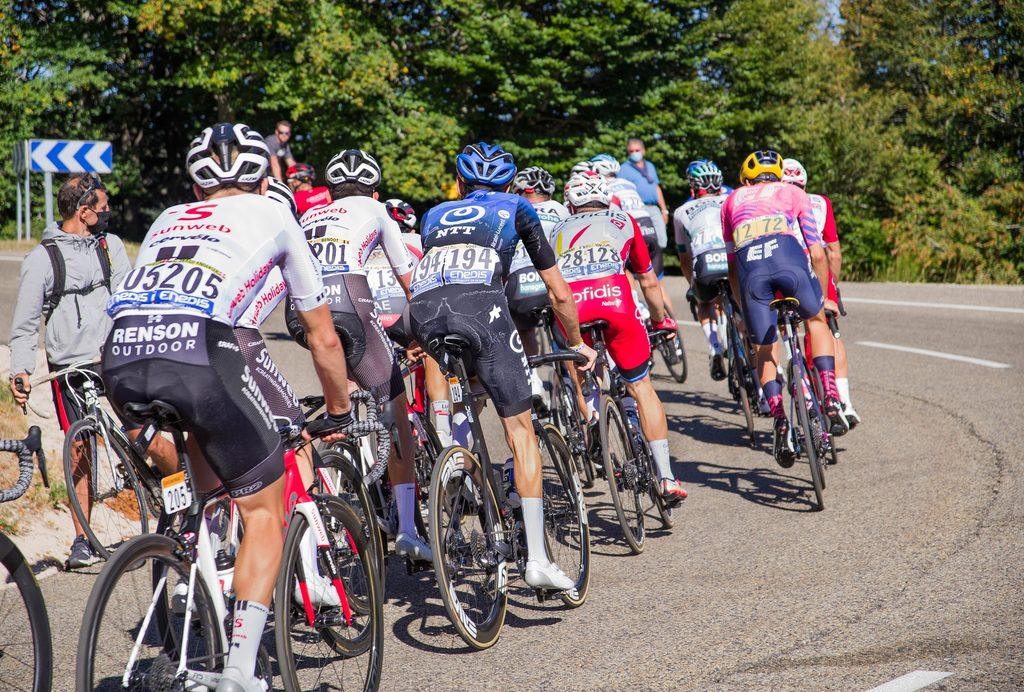
Athletics vests are light, and the design usually covers most of the garment. That makes the decoration method important. A surface print sits on top of the fabric as a layer, while sublimation works differently.
How Sublimation Works:
Heat turns the dye into a gas that bonds into the polyester fibres. The colour becomes part of the fabric, so there is no layer to crack, peel or add weight, and the vest feels the same as a plain one.
| Sublimation | Surface Print | |
| Feel | Same as plain fabric | Can feel stiff or heavy |
| Durability | Does not crack or peel | Can crack with stretch and washing |
| Best for | Full-coverage designs, gradients, sashes | Small logos on cotton |
| Works on | Polyester | Most fabrics |
How Much Does Custom Athletics Club Kit Cost?
Custom athletics kits are priced per piece, and the price depends on a few clear factors rather than a fixed rate. Knowing them helps you plan a budget and compare quotes fairly.
What Affects the Price Per Piece:
- Garment type. A vest costs less to make than a speedsuit or a hoodie.
- Fabric and weight. Stretch fabrics and heavier fleece cost more than lightweight interlock or mesh.
- Quantity. Larger runs lower the cost per piece.
- Personalisation. Names, numbers and sponsor logos add a little to each garment.
- Production speed. Express production costs extra, so ordering early saves money.
How the Minimum Order Works
The MOQ is 20-25 pieces per design. A design is one pattern in one print, so the same vest in junior, women’s and adult sizes counts as a single design. A vest and a pair of shorts are two designs, as is a vest and a singlet, even in matching colours.
Small top-ups for new athletes are available on request, and there is no MOQ limit for sportswear brands and companies.
Want an exact figure? Send your crest, colours and athlete list, and you will get a free mockup within 24 hours along with a tailored quote.
How Long Does It Take to Get Club Kit Delivered?
The fastest way to plan kit is to count back from your first fixture. Add your own approval time and a margin for size collection, because that is the step that most often slips.
| Step | Typical Lead Time | Note |
| Free digital mockup | Within 24 hours | Revisions until you approve |
| Size set or single sample | 5-7 days, plus 5-10 days courier | Sample cost credited against bulk |
| Bulk production | 15-25 business days after approval | Express 7-12 days at extra cost |
| Courier delivery | 5-10 days | DHL, FedEx or UPS, tracked |
| Sea freight | 3-6 weeks | Large multi-squad orders only |
Frequently Asked Questions
Send your crest as a vector file (AI, EPS, PDF or SVG), though a PNG is fine to start. Add your colour references (Pantone codes or a photo of your current kit), an athlete list with age band, garment and size, and your first fixture date. Sponsor logos and woven label artwork can follow later.
A vest has narrower straps and a more open cut, which suits distance runners who want airflow. A singlet has wider shoulders and more coverage, which many sprinters and jumpers prefer. Both can carry the same colourway, but they are separate patterns and count as separate designs, so most clubs pick one for the first order.
Yes. Coaches’ polos, officials’ jackets, spike bags and backpacks can sit on the same order and the same mockup as the athletes’ kit. Each is its own design for the quantity count, so they work best as small add-on lines.
Send photos and your order reference promptly after delivery. A manufacturing defect, such as a print fault, a stitching fault, a wrong size against your approved chart or the wrong garment, is remade free of charge or credited. Shade variation within normal tolerance and sizes chosen incorrectly by the club are not defects.
No. Custom kit is made to order in your colours and sizes, so it can’t be returned for change of mind. That is why the free mockup, the size set and the approved size chart matter: they let you confirm everything before bulk production starts.
Wash at 30°C or cooler, inside out, with a mild detergent. Skip fabric softener, which can clog moisture-wicking fabric, and avoid tumble drying on high heat. Because the colour sits in the fibre, normal washing will not crack or peel it.