
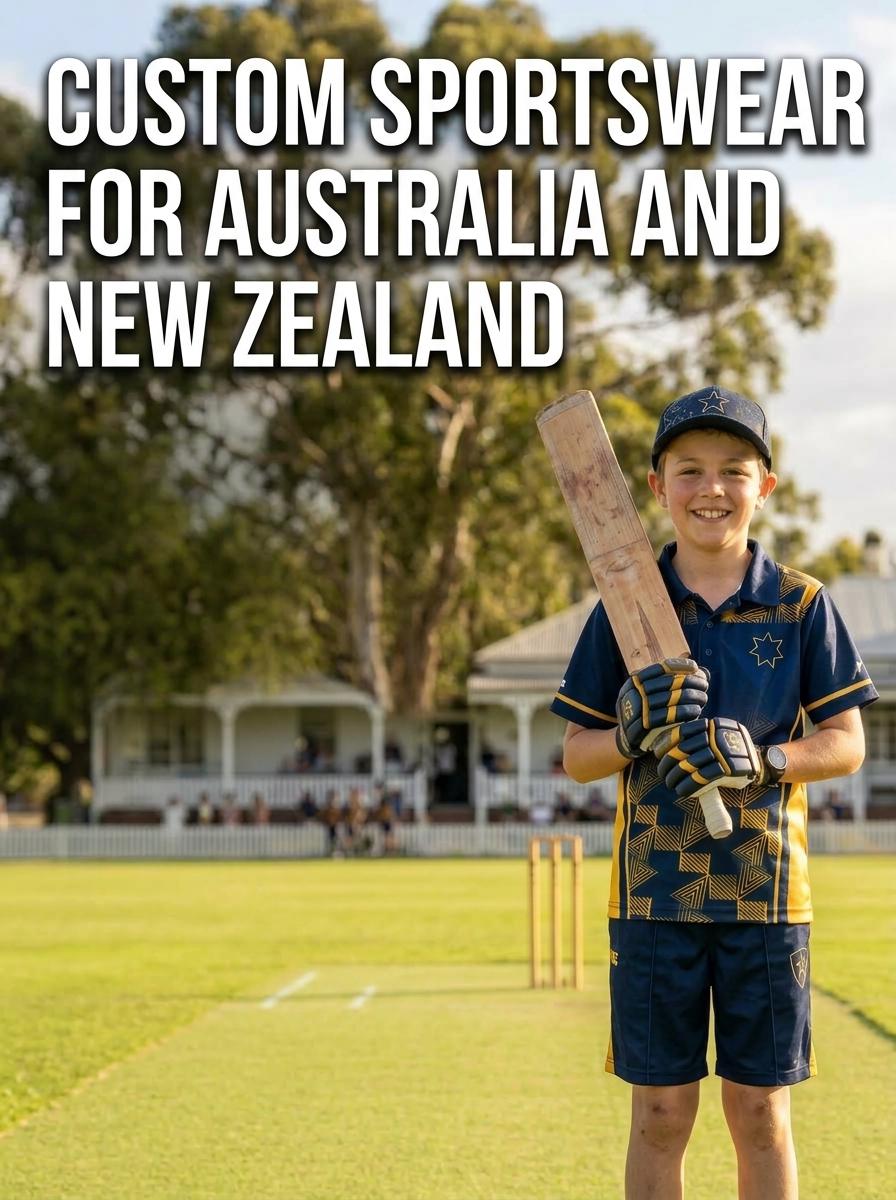
Your committee has agreed on new kits. There are 60 players across three grades, the season starts in March, and someone has just asked, “Can’t we just get them printed locally?” Maybe you can. But maybe a local printer is the wrong call, and finding that out in February is expensive.
Custom sportswear in Australia and New Zealand can come from three places: a local decorator who prints on blank garments, a teamwear supplier selling catalogue styles with your logo, or a manufacturer who makes the garment to your design. Each one wins in a different situation, and the price on the quote rarely tells the whole story once freight, GST and duty are added.
This guide compares all three side by side. You’ll see what clubs, schools, gyms and activewear brands in both countries actually order, what it really costs per piece, how AU and NZ tax and import rules differ, and when to order so your kit arrives before round one.
Three Ways to Get Custom Sportswear in AU and NZ
There is no single best supplier. The right choice depends on how many garments you need, how soon you need them, and how much of the garment has to be custom. Here are the three routes most clubs, schools and gyms choose between.
| Local Decorator | Teamwear Supplier | Custom Manufacturer | |
| What they do | Buys blank tees from a wholesaler and adds your logo by screen print, heat transfer or embroidery | Sells ready-made kit ranges. You pick a style and colours, and they add your club name, number and sponsors | Cuts and sews the garment from fabric to your design, size chart and labels. Fully sublimated jerseys, netball dresses and private-label activewear come from this route. |
| What You Get | Your logo on a blank garment | Catalogue kit with your branding | Garment made to your design |
| Typical minimum | Often 1 piece | Set by the range | Around 10 to 15 pieces per design |
| Turnaround | Days | Days to a few weeks | Several weeks plus shipping |
| Design freedom | Low | Medium | High: any colourway, all-over print, own cut |
| Private label | Rarely | Rarely | Yes: woven labels, size tags, hang tags |
| Cost per piece at volume | Higher | Medium | Often lowest once landed cost is included |
| Price to compare | Local price | Local price | Landed price (freight, GST, duty) |
| Best for | Small runs, one-off events, sponsor polos and anything needed within days. | Clubs happy with a catalogue design, standard sizes and fast delivery from local stock. | Full custom design, one colour standard across every grade, club-wide programmes and gyms or activewear brands building their own range. |
What Australian and NZ Teams Actually Order
Sport in the two countries overlaps more than it differs. Netball, rugby, cricket and soccer are played on both sides of the Tasman, but the codes, seasons and school calendars shape what gets ordered and when.
| Sport / Buyer | Typical Garments | Fabric and Weight | Decoration |
| Rugby League | Jerseys, shorts, socks, club polos | Interlock or mesh, 140 to 180 GSM | Sublimation; embroidered crest on polos |
| Rugby Union, Sevens, Touch | Match jerseys, sevens and touch jerseys, training tees | Interlock 140 to 180 GSM; lighter mesh for touch | Sublimation |
| Netball | Dresses, junior dresses, skorts, position bibs, umpire dresses | Polyester-spandex 4-way stretch, 180 to 220 GSM | Sublimation |
| Cricket | T20 kits, one-day shirts, whites, sun hats | Interlock 140 to 180 GSM; pique 160 to 200 GSM | Sublimation; embroidery |
| Soccer | Match kits, women’s kits, training bibs | Interlock or mesh, 140 to 180 GSM | Sublimation |
| Basketball | Reversible jerseys, shorts, warm-up suits | Mesh, 140 to 180 GSM | Sublimation |
| Swimming clubs | Squad hoodies, rash vests, poolside tracksuits | Polyester-spandex 180 to 220 GSM; fleece 280 to 350 GSM | Sublimation; embroidery |
| Karate, Taekwondo, MMA and BJJ gyms | Gis, no-gi rash guards, grappling shorts | Pearl weave 350 to 500 GSM; polyester-spandex 180 to 220 GSM | Sublimation; embroidered patches |
| Gyms and activewear brands | Leggings, seamless sets, crop tops, biker shorts | Nylon-spandex 240 to 300 GSM; seamless knit 180 to 260 GSM | Own labels and tags; screen print; embroidery |
| Schools | Sport tees, house shirts, tracksuits, hoodies | Interlock 140 to 180 GSM; fleece 280 to 350 GSM | Sublimation; screen print; embroidery |
Sublimation, Embroidery or Screen Print?
The decoration method affects both look and cost, so it is worth choosing deliberately.
- Sublimation: Dye is fused into polyester fibres, so all-over designs, gradients and sponsor logos print in one pass and never crack or peel. It suits performance kit but needs polyester in a light colour base.
- Embroidery: Stitched logos on polos, caps and jackets. It looks premium and lasts, but suits small areas rather than full designs.
- Screen print: Solid-colour logos and names, good for cotton and poly-cotton items such as school tees and hi-vis workwear.
Fabric and Fit Basics
Two decisions shape how a kit feels and lasts: the fabric it is made from and the cut it is made in. Get both right and the same design will look sharper, wear longer and cause fewer complaints at the first training session.
| Fabric | Feel | Typical GSM | Best for |
| Polyester Interlock | Smooth, soft, slightly stretchy. Holds sublimated colour well | 140 to 180 | Rugby, soccer and cricket jerseys, training tees |
| Polyester mesh | Light and cool, with small perforations for airflow | 140 to 180 | Touch, basketball and hot-weather matches |
| Piqué | Textured and waffle-like, with a traditional look | 160 to 200 | Polos and cricket shirts, especially with an embroidered crest |
| Polyester-spandex (4-way stretch) | Medium weight, stretches in every direction | 180 to 220 | Netball dresses, rash vests, fitted activewear |
| Nylon-spandex | Dense and supportive | 240 to 300 | Leggings and compression activewear |
| Fleece | Heavy and warm | 280 to 350 | Hoodies and tracksuits |
Heavier is not automatically better. A 250 GSM jersey will feel hot in a February cricket match, while a very light fabric can look see-through in pale colours and wear faster in contact sports. Match the weight to the sport and the climate.
Getting the Fit Right
Good fit starts with the size chart. A few points to settle before you order:
- Separate blocks: Men’s, women’s and junior garments should be cut on their own patterns, not just scaled down from one. This matters most for netball dresses and women’s soccer kits.
- Player or supporter cut: A close-fitting player cut suits match day, while a looser supporter cut suits fans and sponsors’ guests. Both can come from the same artwork.
- Your own chart: If your association already uses a set size run, send it so every grade fits consistently.
- Copy a garment you like: Send an existing kit that fits well and a good manufacturer can measure and replicate it.
- Tolerance: A tolerance of around 1 to 1.5 cm is a reasonable standard for finished garments.
What Drives the Price Per Piece?
Quantity
Setup work (pattern, print files, cutting) is spread across the run, so per-piece cost falls as volume rises. The biggest drop usually comes between the minimum order and around 100 pieces.
Fabric Weight and Type
Heavier fabrics use more material. A 350 GSM fleece hoodie costs more than a 150 GSM mesh jersey, and 4-way stretch fabrics cost more than standard interlock.
Number of Panels
A jersey with a body, sleeves, side panels and collar takes more cutting and stitching time than a simple tee.
Decoration Method
Sublimation is usually included in the garment price for polyester kit. Embroidery is charged by stitch count and position, so a crest and three sponsor logos add up.
Sample Cost
A physical sample is usually charged separately. Elite Sport Uniform credits it against the bulk order.
Freight
Air courier is faster and costs more per kilo. Sea freight is cheaper but takes weeks.
Import Duty and GST
Both apply to apparel arriving in Australia or New Zealand, and they are calculated on the goods value, so they rise with the price of the order.
GST, Import Duty and Delivery
Both countries tax imported sportswear in a similar way, but the rates, thresholds and fees differ. For a club order, the practical question is whether the tax is already in your price or arrives as a bill at the door.
| Australia | New Zealand | |
| GST | 10% | 15% |
| Duty on apparel | Commonly 5% | Set by tariff code |
| Border threshold | A$1,000 | NZ$1,000 |
| Extra border charges | Import processing and broker fees | Customs and MPI goods levy, plus entry fees |
Timeline: When to Order for Your Season
Custom kit is rarely late because of production. It is late because the committee took three weeks to approve the design. Work backwards from your first game, and build in time for approvals, a sample and buffer.
| Stage | Typical Time | Notes |
| Enquiry to digital mockup | About 24 hours | Depends on how complete your brief is |
| Design changes and approval | 1 week | The stage that varies most, because it depends on your committee |
| Physical sample (optional) | 5 to 7 days plus courier | Worth it for a new cut, especially netball dresses |
| Bulk production | 15 to 25 business days | Cutting, sublimation, stitching, quality checks, packing |
| Express production | 7 to 12 days | Extra cost, for finals series or late decisions |
| Air courier | 5 to 10 days | Duty and GST paid if you have a delivered quote |
| Sea freight | 3 to 6 weeks | Suits large orders and brands, not tight deadlines |
7-Point Checklist Before You Order
Most delays and remakes come from missing information at the start, not from factory errors. Work through these seven points before you request a quote, and any supplier can price and produce your kit faster.
- Artwork in the Right Format
Send logos as vector files (AI, EPS, SVG or a vector PDF). A low-resolution JPEG or a screenshot will need redrawing.
- Colour References
Give Pantone codes for your club colours.
- A Full Size Breakdown
List quantities by size and by grade. If you have not collected sizes yet, use a sample set of sizes for players to try on rather than guessing.
- A Sample or Mockup Approval
Approve the digital mockup in writing, and order a physical sample for any new cut or fabric. A sample costs a little and saves a lot if the fit is off across a whole squad.
- Delivery Terms in Writing
Confirm whether the quote is delivered (freight, duty and GST included) or ex-works. Give the full delivery address with postcode, and a phone number for the courier.
Conclusion
The right supplier depends on the job. For small runs, one-off events and deadlines measured in days, a local decorator is the sensible call. For catalogue styles in stock sizes, a teamwear supplier is the simplest route. When you want your own design, one colour standard across every grade, or a private-label range, a custom manufacturer is usually the better fit.
Whichever route you choose, compare landed cost against landed cost, work back from your first match, and brief your supplier with the checklist above.
Ready to price your kit? Send us your garment list, quantities, size breakdown, vector logo and delivery postcode. We’ll return a free digital mockup and a delivered quote, with freight, duty and GST included, within 24 hours.
Frequently Asked Questions
Sublimation fuses dye into polyester fibres rather than sitting on top of the fabric, so it resists cracking and peeling. To keep colours bright, wash in cold water, turn garments inside out, and avoid bleach, fabric softener and hot tumble drying. Fading is most often caused by heat and harsh detergent, not by the print.
Yes. Names and numbers can be sublimated into the design or added as heat-transfer or embroidered elements. Send a spreadsheet listing each player’s name, number and size before production starts. Changes after production begins usually mean extra cost and delay.
Usually, yes, as long as your supplier keeps your artwork, Pantone references and size chart on file. Ask for that in writing at the first order. Minor batch-to-batch shade differences can still occur, so order a few spare garments in the first run for late joiners rather than reordering a handful later.
Not automatically. Hi-vis garments are often designed to a European standard such as EN ISO 20471, which is not the same as being certified to an Australian or New Zealand standard. If a site, client or tender requires a specific certification, say so in your first enquiry and ask the supplier to confirm in writing whether they can meet it.
Check that they can show a real factory, not just a catalogue, through photos, a video call or a sample. Look for a clear company history, named contacts, a written quote with terms, and a defect policy. Be cautious of anyone who wants full payment upfront with no mockup or sample, or who won’t answer questions about who actually makes the garment.
Brands normally add woven neck labels, size tags, hang tags and a care label. Both Australia and New Zealand have rules on what must appear on clothing sold to consumers, such as care instructions and fibre content, and Australia has country-of-origin rules for retail. Check current requirements with the ACCC (Australia) or the Commerce Commission (New Zealand) before finalising label artwork.
Leave a Reply